

romper
to break
To break something apart
Encoding Strategies:
mnemonic
visual
romp
to play energetically
+
-er
verb suffix
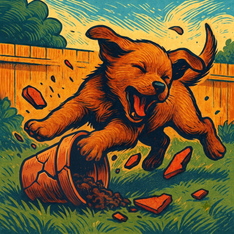
Romper means to break and sounds like the English word romp0 — what puppies and kids do when they play, tumbling and bounding around so wildly that they end up knocking things over and breaking them.
romper
to break, to smash
To break a physical object into pieces.
Rompí un plato mientras lavaba los platosI broke a plate while washing the dishes
El niño rompió la ventana con un pelotazoThe boy smashed the window with the ball
to tear, to rip (paper or cloth)
Breaking something flat like paper or fabric means tearing it apart.
Rompió la carta en mil pedazosShe tore the letter into a thousand pieces
Se enojó tanto que rompió la fotoHe got so angry he ripped up the photo
to break (rules, silence, a promise)
You can break something abstract just like an object: a rule, a promise, or the silence all snap apart.
Nunca rompe las reglasHe never breaks the rules
Un ruido fuerte rompió el silencioA loud noise broke the silence
to break (waves)
Waves break apart into foam when they hit the shore.
Las olas rompían contra las rocasThe waves broke against the rocks
Nos sentamos a ver romper el oleajeWe sat down to watch the surf break
romper a
to burst out, to suddenly start (+ infinitive)
When something breaks open all at once, an action bursts out of it. You break into crying or laughing.
El bebé rompió a llorar de repenteThe baby suddenly burst out crying
Todos rompieron a reír con el chisteEveryone burst out laughing at the joke
romper con
to break up, to break off (a relationship or the past)
Breaking with a person or a tradition snaps the tie between you and them.
Rompió con su novio después de dos añosShe broke up with her boyfriend after two years
Decidieron romper con la tradición familiarThey decided to break with the family tradition
romperse
to break, to get broken
When something breaks on its own rather than someone breaking it, Spanish makes it reflexive, as if it breaks itself.
El vaso se rompió al caer al sueloThe glass broke when it fell to the floor
Se me rompió el teléfono y ya no enciendeMy phone broke and it won't turn on anymore
to break (a body part)
For breaking your own bone, Spanish uses the reflexive to emphasize that it happens to you personally, on your own body.
Se rompió la pierna esquiandoHe broke his leg skiing
Me caí de la bici y casi me rompo el brazoI fell off my bike and almost broke my arm