

aferrar
to grip
Reviewed by: David WestfallCofounder
To hold onto something tightly
Encoding Strategies:
linguistic
visual
a-
to make
+
ferrous
made of iron
+
-ar
verb suffix
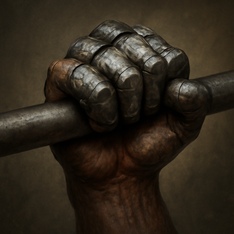
Aferrar means to grip and is literally to make something ferrous1, because when you grip something, it's firmly held as if by iron. Like an ironclad grip.
aferrar
to grasp, to grab, to seize
To take hold of something firmly.
El niño aferró la cuerda con las dos manosThe boy grasped the rope with both hands
Aferró el martillo y siguió trabajandoHe grabbed the hammer and kept working
to anchor (nautical)
To fix a boat in place. An anchor is a lump of iron whose whole job is to grip the seabed.
Los pescadores aferraron el barco antes de la tormentaThe fishermen anchored the boat before the storm
Aferramos la lancha cerca de la orillaWe anchored the boat near the shore
aferrarse a
to cling to, to hold onto (physical)
When you cling to something and refuse to let go, you fasten yourself to it. The reflexive 'se' makes you the one being held fast, and the 'a' marks what you're anchored to.
La niña se aferró a su madre en la multitudThe girl clung to her mother in the crowd
Me aferré a la barandilla para no resbalarI held onto the railing so I wouldn't slip
to cling to, to hang onto (to ideas, hopes)
When you cling to a belief, a hope or a memory and won't give it up, even when the evidence says you should. The reflexive 'se' makes you the one held fast, and the 'a' marks the idea you're anchored to.
Se aferra a la idea de que todo saldrá bienShe clings to the idea that everything will turn out fine
No te aferres a un plan que ya no funcionaDon't hang onto a plan that no longer works